Roof cleaning in Grand Rapids.Those black streaks are eating the shingle.
It's a bacteria called Gloeocapsa magma and it feeds on the limestone filler in the shingle. Pressure blasts the granules off with it, which is how a cosmetic problem turns into a new roof. We put the cleaner on at under a hundred PSI.
Call616-229-0625Streak-free or we re-clean it free within 7 days. You get a flat number on the phone.
- 5.0from 49 Google reviews
- 7 daysto re-clean it free if it streaks
- 25 milesout of Wyoming, MI
- Insured and owner-operated
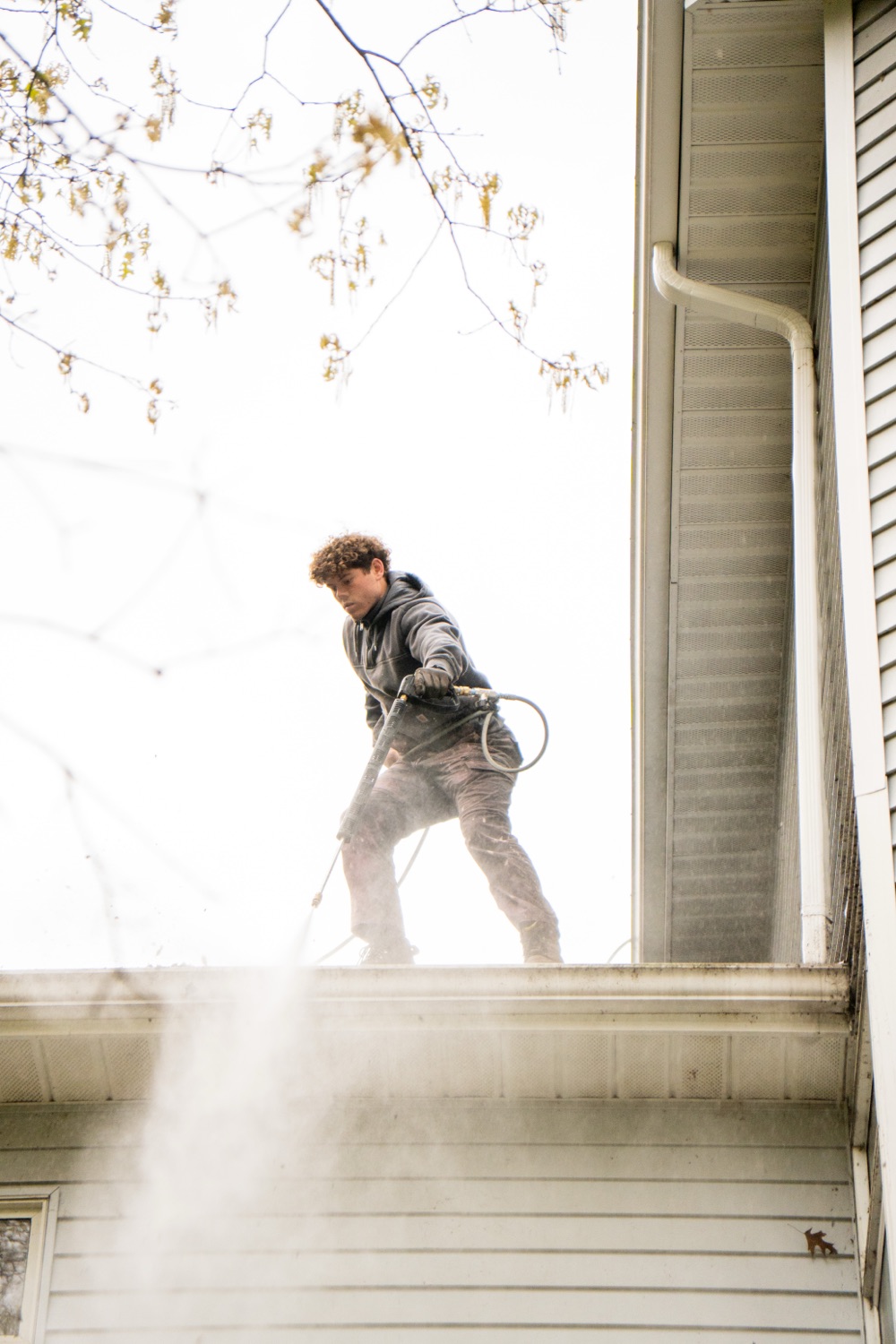
Sound familiar
Three ways people end up on this page.
Same organism behind all three.
Somebody told you the roof needs replacing.
A roofer knocked, or a neighbor said it looked bad. The shingles are probably fine and the staining just needs to be killed and rinsed.
The streaks are in every photo of the house.
From the street it's the first thing you see, and it's the one thing on the house you can't reach to fix yourself.
Your neighbor's roof streaked and now yours has.
It spreads by airborne spores, which is why whole streets go the same way. Older roofs go first, because more of the limestone is exposed.
What you're actually getting.
A flat number
Not an estimate that creeps. You get the price up front and it's the price when we're done.
Streak-free or we're back
If it streaks we re-clean it free within 7 days. You don't chase us and you don't pay twice.
Soft wash, not blasting
Low pressure and the right cleaner. Plant-safe, and no high pressure on shingles. That's the thing that wrecks a roof.
Owner-operated
The same crew every time, insured, working out of Wyoming, MI. No subcontractors showing up under our name.
Start to finish
What happens when you call.
- You call us Tell us the roof, the pitch and how heavy the streaking is. You get a flat number on that call, and no estimate visit.
- Plants get soaked The cleaner we use on a roof is stronger than a siding wash, so everything below the roofline gets pre-wet and rinsed after. Standard on every visit.
- It goes on gently Under a hundred PSI, left to dwell so it kills the growth, then rinsed. Some staining takes a rain or two to wash clear.
“Tre did a great job on my home. He communicated well and was kind and easy to work with. I highly recommend this service to everyone in need of power washing services.”
“While living in the woods has its charms, a moss covered roof and moldy siding isn't one of them! Amazing job on the roof and siding. Highly recommend! 10 out of 10!”
“The team did an outstanding job! They were professional, they were quick, and they delivered exactly what they promised.”
Proof
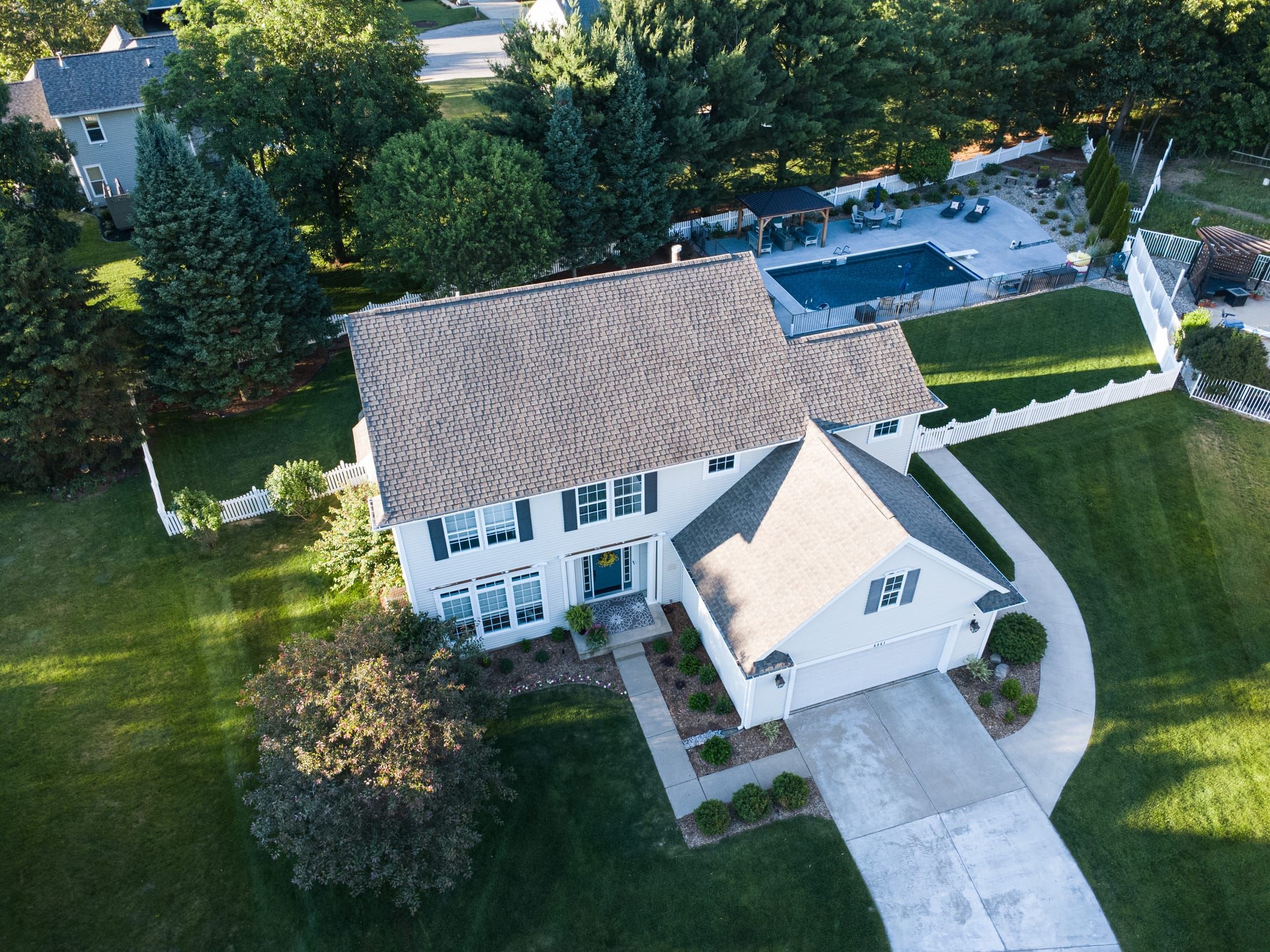
The streaks run down from the ridge.
They trail with the rainwater, which is why they start at the top. Older roofs go first. More of the limestone filler is exposed as a shingle ages, and the growth has more to eat.
Call616-229-0625What it costs
We can't print a price. Here's what sets yours.
A number printed on a website and the number our crew gives you standing in your driveway have to be the same number, and on this work they often can't be. So here's what actually moves it.
- COMING OUT
- Nothing. There's no estimate visit to schedule and nothing owed to ask.
- THE SIZE
- Square footage and the run of siding. It's the biggest single factor on a house wash.
- ONE STORY OR TWO
- Height changes the equipment, the time and the safety setup. A two-story isn't a ranch scaled up.
- HOW DIRTY IT IS
- A light green film rinses. Years of black streaking, heavy moss, rust or oil takes more product and more time.
- HOW MUCH AT ONCE
- One trip over four surfaces costs less than four visits. The drive out and the setup only happen once.
Before you call
The four things people ask on the phone.
Is soft washing safe for asphalt shingles?
Yes. Low pressure is the method the Asphalt Roofing Manufacturers Association recommends for asphalt shingles. It kills the algae without stripping the granules that protect the roof. High pressure is the thing that damages shingles.
Do I need my roof cleaned or do I need a new roof?
Most streaked roofs don't need replacing. They need the organism killed and rinsed. Call and describe what you're seeing and we'll tell you honestly whether a wash will fix it.
Will the black streaks come back?
Eventually. It spreads by airborne spores, so it depends on your tree cover and the roofs around you. A proper soft wash usually keeps a roof clear for three to five years.
Do the streaks disappear right away?
Mostly. Some staining takes a few days and a rain or two to wash clear. That's normal, and it means the organism was killed rather than scrubbed off the surface.
The detail, if you want it
What causes the black streaks on your roof
The dark streaks on an asphalt roof are caused by Gloeocapsa magma, a cyanobacterium that feeds on the limestone filler in the shingles. It forms dark, melanin-pigmented colonies that protect it from UV — which is exactly what you see as the black staining. It spreads by airborne spores, which is why entire neighborhoods often streak the same way, and in West Michigan's humid climate it's active from spring through early fall.
Because the streaks run with rainwater, they trail downward from the ridge. Older roofs streak first — more of the limestone filler is exposed as shingles age. It's not cosmetic-only, either: the dark growth holds moisture against the shingle and absorbs heat, both of which work against the roof. We cover the full biology in what causes black streaks on a roof.
Why you never pressure wash a roof
Asphalt shingles are protected by a layer of mineral granules — that granule layer is the roof's UV shield and weather barrier. High-pressure water blasts those granules off (you'll see them collect in the gutters), and every pass shortens the roof's life. The Asphalt Roofing Manufacturers Association (ARMA) specifically recommends low-pressure cleaning methods for asphalt shingles, not pressure washing.
This is the situation behind the homeowner who's told they "need a new roof" because of the streaks — when in reality the shingles are fine and the staining just needs to be killed and rinsed. Pressure washing a roof can turn a cosmetic problem into an actual replacement.
How soft-wash roof cleaning works
We apply a cleaning solution at very low pressure (under ~100 PSI), let it dwell so it kills the organism at the cellular level, then rinse gently. The streaks fade as the growth dies. Some residual discoloration can take a few days and a rain or two to fully wash clear — that's normal, and it means the organism was killed rather than just scrubbed.
Landscaping safety matters more on roof jobs because the solution is stronger than a siding wash: we pre-wet and rinse all plants and grass below the roofline as standard practice on every visit.
How long results last
A soft-washed roof typically stays streak-free for three to five years, depending on tree cover, humidity, and whether neighboring roofs are seeding spores onto yours. Zinc or copper strips at the ridge can slow regrowth; we don't install them but we're happy to point you in the right direction.
Roof Cleaning across the Grand Rapids metro
- Roof Cleaning in Grand Rapids
- Roof Cleaning in Wyoming
- Roof Cleaning in Kentwood
- Roof Cleaning in Grandville
- Roof Cleaning in Holland
- Roof Cleaning in Hudsonville
- Roof Cleaning in Walker
- Roof Cleaning in Jenison
- Roof Cleaning in Byron Center
- Roof Cleaning in Caledonia
- Roof Cleaning in Rockford
- Roof Cleaning in Cascade
- Roof Cleaning in Ada
- Roof Cleaning in East Grand Rapids
- Roof Cleaning in Comstock Park
- Roof Cleaning in Allendale
House Washing
Full siding soft-wash. Removes algae, mildew, dirt, and the black gunk in the corners — plant-safe, no high pressure.
Gutter Cleaning
Hand-clean the troughs plus an exterior gutter-face wash. Don't find out they're clogged when it pours.
Full Property Exterior Cleaning
House + roof + drive + walkways + deck in one visit. One crew, one flat-rate number — the highest-ROI option.
Straight answers, including when to do it yourself
Does Wet & Forget Actually Work on a Roof?
An honest answer: Wet & Forget does kill roof algae, slowly — here's what it does well, why the streaks come back, and when spraying it yourself is the right.
Soft Washing vs. Pressure Washing: What's the Difference?
Soft washing uses low pressure + a cleaning solution; pressure washing uses high force. Here's which to use on roofs, siding, concrete & decks.
What Causes Black Streaks on a Roof?
Black streaks on asphalt roofs are Gloeocapsa magma, a bacteria that eats shingle filler. Here's why it spreads — and how soft washing removes it.
Is Soft Washing Safe for Asphalt Shingles?
Yes — soft washing is the low-pressure roof cleaning method recommended by ARMA. Pressure washing strips granules and can void shingle warranties.
You probably don't need a new roof.
Call616-229-06255.0 from 57 Google reviews
Wyoming, MI · Insured · Owner-operated · Flat number on the phone · Streak-free or we re-clean it free within 7 days · 5.0 from 49 Google reviews